02 / 07
Revitalizing the AMA Mobile App
4.8★
App Store Rating
A 1.9-star app was driving members to competitors and flooding the contact centre with calls that should’ve been self-serve.
UX Lead — research, information architecture, and UI design across iOS and Android.
4.8★ rating, 348K new users in 12 months, #2 Lifestyle App in Canada (2023).
A 1.9-star rating isn't just a number — it's every frustrated member who couldn't find their roadside assistance button at 2am.
The AMA Mobile App had become a liability. Members were abandoning it for competitor apps and calling into the contact centre for tasks that should've been self-serve. The app suffered from a confusing information architecture, inconsistent UI patterns, slow performance, and a complete lack of personalization. Internal teams operated in silos, shipping features without a unified design system or user-centred strategy.
My mandate: Lead a complete UX/UI overhaul that would transform the app from a 1.9 to a product worth putting in a million members' pockets.
"Members weren't failing — the app was. Every drop-off point was a design decision we hadn't thought through from their perspective."
Audited 1.9-star reviews, heatmaps, session recordings, and contact centre logs to identify the 12 highest-friction pain points.
Conducted 24 moderated user tests and diary studies across 6 member segments — roadside, travel, insurance, and membership users.
Rebuilt the information architecture from the ground up using card sorting and tree testing to validate navigation with real members.
Designed a new component library in Figma, aligned to the AMA Digital Brand Guidelines — consistent, accessible, and scalable.
Three rounds of usability testing with interactive prototypes, iterating on key flows before a single line of production code was written.
Phased rollout with feature flags, A/B testing, and ongoing analytics monitoring — adapting to real-world member behaviour post-launch.
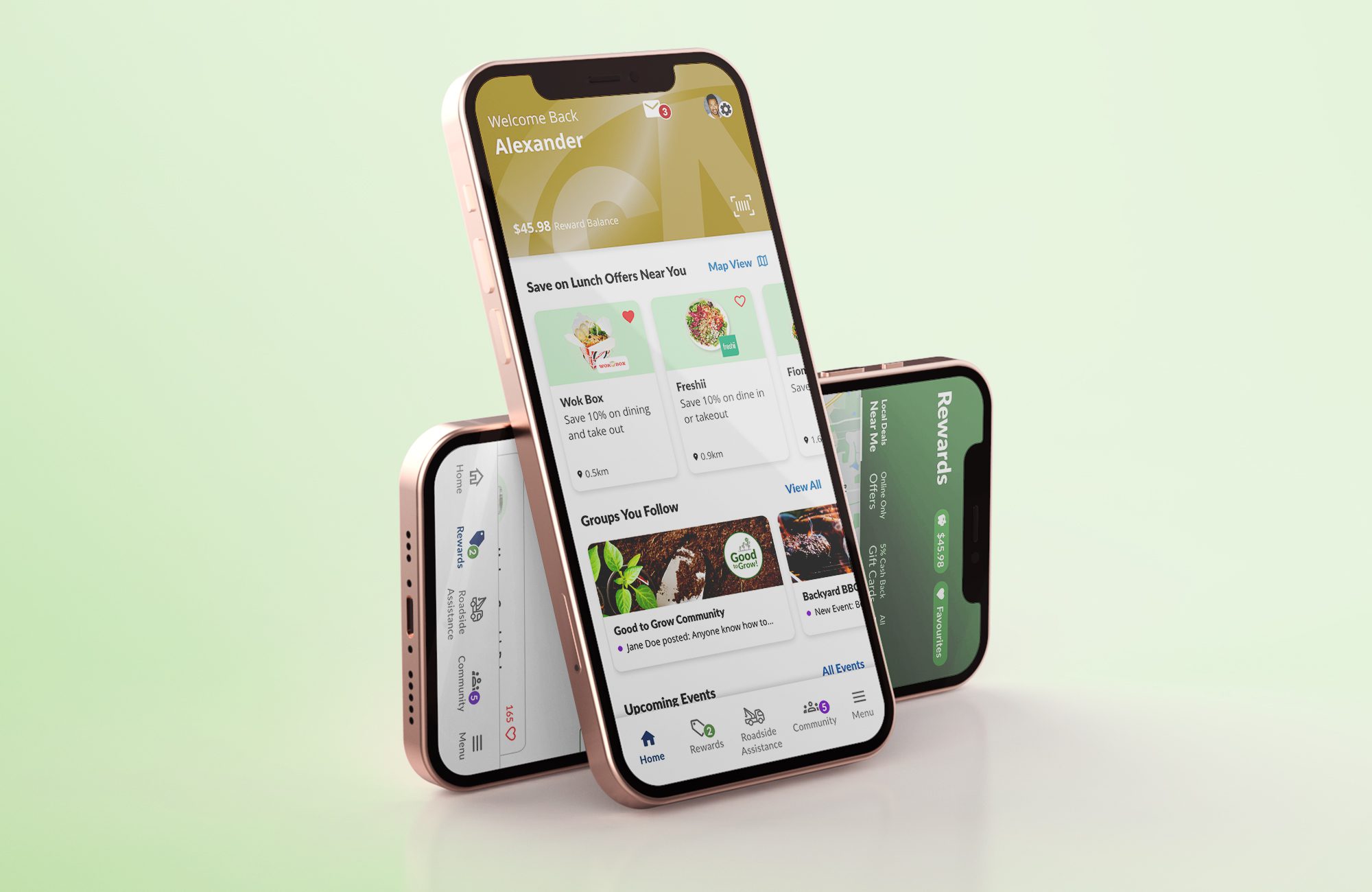
The redesigned app introduced a personalized dashboard that surfaced the most relevant services based on each member's profile. Roadside assistance — the #1 use case — became reachable in one tap from anywhere in the app. A new bottom navigation replaced the buried hamburger menu, and every core flow was reduced by 40–60% in steps.
Key decisions: We simplified the membership management flow, integrated travel booking and insurance into unified journeys, and designed an offline-capable roadside request flow so members could get help even with poor signal.